

You know those nights, right? The ones where the clock is ticking, the kids are starting to hum with that pre-dinner frenzy, and you stare blankly into the fridge, utterly uninspired. Yeah, I’ve been there more times than I care to admit. For the longest time, my go-to was usually a frantic pasta or some sort of assembled-from-the-pantry chaos. But then, a few years back, I stumbled upon this amazing caponata, and honestly, it was a revelation. It’s not just a side dish; it’s a flavor bomb that can completely transform a simple meal. Think of it like the ultimate flavor enhancer for your table, a little bit of Mediterranean magic that’s surprisingly straightforward. It’s got this incredible depth of flavor that feels like it took hours, but trust me, it’s way more manageable than you think. If you’ve ever shied away from making caponata because it seemed too fussy, then pull up a chair, because I’m about to share the recipe that’s become my weeknight superhero.
What is a caponata?
So, what exactly is this magical dish, caponata? At its heart, caponata is a Sicilian eggplant relish or stew. Don’t let the word “relish” fool you, though; it’s hearty enough to be a main component of a meal. It’s a glorious medley of sweet and savory flavors, usually featuring tender chunks of eggplant as the star, alongside other vibrant vegetables like bell peppers, celery, tomatoes, and often olives and capers for that briny kick. The whole symphony is brought together with a tangy-sweet dressing, typically with vinegar and sugar, which is where that incredible balance comes from. It’s rustic, it’s beautiful, and it tastes like sunshine in a bowl. It’s kind of like a Ratatouille’s cool, Italian cousin, but with a more concentrated, punchy flavor profile. It’s essentially a way to celebrate summer produce in the most delicious way possible, preserving those flavors and making them sing year-round.
Why you’ll love this recipe?
Honestly, there are so many reasons why this particular caponata recipe has earned a permanent spot in my recipe rotation. First off, the flavor. Oh, the flavor! It’s this perfect dance between sweet, tangy, and savory, with the subtle bitterness of eggplant perfectly complemented by the sweetness of the tomatoes and peppers, and then BAM! those briny capers and olives jump in. It’s complex, it’s addictive, and it’s just so darn satisfying. Then there’s the simplicity. I know, I know, eggplant can sometimes seem intimidating, but I’ve streamlined this process so that it’s totally achievable, even on a busy weeknight. You don’t need fancy techniques, just a little bit of chopping and simmering. And let’s talk about cost-efficiency! Eggplant is usually pretty affordable, and the other vegetables are standard pantry staples, making this a budget-friendly way to create something truly impressive. What I truly adore about this caponata, though, is its versatility. I’ll get to that more in a bit, but the fact that it can be served hot, cold, or at room temperature, and plays so nicely with so many different things, makes it a lifesaver. It’s the kind of dish that makes you look like a culinary genius with minimal effort. It’s genuinely a game-changer for those “what’s for dinner?” moments.
How do you make a caponata?
Quick Overview
This recipe is all about building layers of flavor. We’ll start by softening the eggplant to a perfect, creamy texture, then sautéing the aromatics and vegetables until they’re tender and sweet. The magic happens when we bring it all together with a simple yet powerful sweet and tangy dressing, allowing the flavors to meld beautifully. It’s a straightforward process, and the result is a vibrant, flavourful dish that’s miles better than any store-bought version you’ve ever tried. You’ll be amazed at how easy it is to achieve such restaurant-worthy results right in your own kitchen.
Ingredients
For the main star (eggplant):
2 large eggplants, about 1.5 lbs total
Salt (for salting the eggplant)
1/2 cup olive oil (for frying the eggplant, you might need a bit more)
My secret tip for the eggplant: I always look for eggplants that feel heavy for their size, and the skin should be smooth and shiny. This usually means they’re fresh and have fewer seeds. And don’t be shy with the salt when prepping the eggplant – it’s a crucial step for drawing out moisture and preventing it from becoming greasy. If you’re short on time, you can skip the salting and draining step, but I find it really makes a difference in the final texture.
For the Flavor Base & Veggie Medley:
1 large onion, finely chopped
2 celery stalks, finely chopped
1 green bell pepper, seeded and finely chopped
1 red bell pepper, seeded and finely chopped
2 cloves garlic, minced
1 (28 ounce) can crushed tomatoes
1/2 cup pitted green olives, roughly chopped
2 tablespoons capers, rinsed and drained
Freshly ground black pepper, to taste
For the veggies, I like to chop them all to a similar size. It makes for a more cohesive dish and ensures everything cooks evenly. The red bell pepper adds a lovely sweetness, while the green offers a slightly more herbaceous note. Don’t skimp on the olives and capers; they are non-negotiable for that essential salty, briny punch!
For the Tangy-Sweet Dressing:
1/4 cup red wine vinegar
2 tablespoons granulated sugar (or to taste)
A small handful of fresh basil leaves, torn, for garnish (optional but highly recommended!)
This dressing is where the magic really happens. The balance of vinegar and sugar is key to that classic caponata taste. I often taste and adjust the sugar and vinegar at the end, because sometimes the tomatoes can be a little more acidic, or you might prefer it a touch sweeter. The fresh basil at the end is like the cherry on top – it adds a beautiful freshness that cuts through the richness.
Step-by-Step Instructions
Step 1: Preheat & Prep Pan
Start by preparing your eggplant. Slice the eggplants into roughly 1-inch cubes. Place them in a colander set over a bowl or in the sink. Sprinkle generously with salt, tossing to coat. Let them sit for at least 30 minutes (or even up to an hour). This draws out the bitter liquid and excess moisture, preventing the eggplant from absorbing too much oil when frying. After they’ve sat, rinse the eggplant cubes thoroughly under cold water to remove the salt, and then pat them completely dry with paper towels. This drying step is super important!
Step 2: Mix Dry Ingredients
This recipe doesn’t really have “dry” ingredients in the traditional baking sense, but this step is about getting your mise en place ready. Have your chopped onion, celery, bell peppers, minced garlic, chopped olives, and rinsed capers all ready to go. The eggplant should be prepped and patted dry. This makes the sautéing process so much smoother and prevents you from scrambling while things are cooking.
Step 3: Mix Wet Ingredients
In a small bowl, whisk together the red wine vinegar and sugar for the dressing. Set this aside. You’ll also have your can of crushed tomatoes ready. I usually give the can a good shake before opening, or stir it in the can to ensure it’s well combined.
Step 4: Combine
In a large, deep skillet or Dutch oven, heat about 1/4 cup of olive oil over medium-high heat. Working in batches if necessary to avoid overcrowding the pan, add the dried eggplant cubes. Fry them until they are golden brown and tender on all sides. This usually takes about 5-7 minutes per batch. As they finish, remove them with a slotted spoon and drain them on paper towels. Add more olive oil as needed between batches. You want them tender, not greasy!
Step 5: Prepare Filling
In the same skillet (you can pour off most of the excess oil, leaving about 1-2 tablespoons), add the chopped onion and celery. Sauté over medium heat until softened, about 5-7 minutes. Add the chopped bell peppers and cook for another 5-7 minutes until they start to soften. Stir in the minced garlic and cook for another minute until fragrant, being careful not to burn it. Pour in the crushed tomatoes, add the chopped olives and capers, and season with freshly ground black pepper. Stir everything together, bring to a simmer, and cook for about 10 minutes, allowing the flavors to meld.
Step 6: Layer & Swirl
Gently add the fried eggplant cubes into the tomato and vegetable mixture. Stir carefully to combine, trying not to break up the eggplant too much. Pour in the prepared vinegar and sugar dressing. Stir it in gently. At this point, you want to let it simmer gently, uncovered, for about 15-20 minutes. This allows the flavors to really meld and the sauce to thicken slightly. The eggplant will absorb all those wonderful flavors. I often give it a gentle stir every few minutes to make sure nothing is sticking.
Step 7: Bake
This recipe doesn’t typically require baking. The stovetop simmering is where all the flavor develops and the dish comes together. If you *really* wanted to bake it to intensify flavors further (and I’ve done this in a pinch!), you could transfer the mixture to a baking dish, cover it, and bake at 350°F (175°C) for about 30 minutes. But honestly, the stovetop method is my preferred way and yields fantastic results.
Step 8: Cool & Glaze
Once the caponata has simmered and thickened to your liking, remove it from the heat. Let it cool for at least 15-20 minutes before serving. The flavors really deepen as it sits. If you’re not serving it immediately, this is the time to let it come to room temperature or chill it in the refrigerator. The “glaze” is essentially the reduced sauce itself, so there’s no separate glaze to make. Just ensure it has a nice, luscious consistency.
Step 9: Slice & Serve
Serve the caponata warm, at room temperature, or chilled – it’s delicious all ways! Garnish with torn fresh basil leaves just before serving for a burst of freshness. It slices beautifully when served as is, or you can spoon it onto bread or crostini.
What to Serve It With
This is where the real fun begins with caponata! It’s the ultimate chameleon of the culinary world. For breakfast, I love a small dollop on top of a perfectly poached egg, or even spread on some toasted sourdough. It adds this unexpected zing that wakes up your taste buds. Brunch is a no-brainer: it’s fantastic alongside grilled sausages, crusty bread, and a simple green salad. It adds an elegant touch without any extra fuss. And as a dessert? Okay, hear me out! A small serving, perhaps with a tiny drizzle of balsamic glaze and a sprinkle of toasted pine nuts, can be surprisingly sophisticated. It’s not sweet like a typical dessert, but it’s rich and flavorful. For those cozy snack moments, it’s my absolute favorite spread on toasted baguette slices (crostini!) with a sprinkle of Parmesan. It’s also incredible served alongside grilled fish, roasted chicken, or even as a topping for lamb chops. My kids surprisingly love it piled onto pasta, or even just eaten straight from the container with a fork when they think I’m not looking. It’s a lifesaver when I need to put a satisfying meal on the table quickly – just pair it with some crusty bread and you’re golden.
Top Tips for Perfecting Your Caponata
Over the years, I’ve learned a few tricks that elevate this caponata from good to absolutely unforgettable. For the zucchini prep, the salting and draining is non-negotiable in my kitchen. It takes a little time, but it’s the key to getting that tender, almost creamy texture without it becoming a greasy mess. Make sure you pat it *really* dry after rinsing. When it comes to mixing, gentle is the word. You want the eggplant to absorb the flavors, not turn into mush. So, fold it in carefully, and avoid vigorous stirring once everything is combined. For swirl customization, that’s more about the flavor itself here, but if you’re thinking visually, ensure your veggies are chopped fairly uniformly so they cook evenly. Ingredient swaps are totally possible! If you’re not a fan of olives, you can omit them, though you’ll lose a bit of that briny punch. Some people add toasted pine nuts or slivered almonds towards the end for a bit of crunch, which is lovely. If you’re sensitive to vinegar, you can reduce the amount slightly, or use a milder vinegar like apple cider vinegar, but red wine vinegar really gives it that signature tang. Baking tips are minimal for this recipe, as stovetop is king, but if you do bake it, use a covered dish for the first part to keep it moist. For glaze variations, as I mentioned, the sauce itself is the “glaze.” You can, however, stir in a tablespoon of balsamic glaze right at the end for an extra layer of complex sweetness and tang. And remember, caponata often tastes even better the next day, as all those flavors have had more time to get acquainted!
Storing and Reheating Tips
This is another reason I adore caponata – it’s fantastic for meal prep! Stored properly, it keeps beautifully and the flavors actually improve. At room temperature, it’s best enjoyed within a few hours of cooling. I usually cover it loosely with a clean kitchen towel or plastic wrap if it’s going to be out for a bit, especially if it’s warm in the kitchen. For refrigerator storage, transfer it to an airtight container. It will stay delicious for a good 4-5 days. I find it’s perfect for lunches throughout the week. If you want to freeze it, make sure it’s completely cooled. Wrap it well in plastic wrap, then transfer to a freezer-safe container or a heavy-duty freezer bag. It should last for up to 3 months. To thaw, transfer it to the refrigerator overnight. Reheating is super simple: gently warm it on the stovetop over low heat, stirring occasionally, until heated through. You can also microwave it in short bursts. For the glaze timing advice, it’s pretty straightforward. The sauce is already incorporated. If you’re freezing it, the flavors will concentrate a bit more upon reheating, so you might want to add a tiny splash of vinegar or water if it seems too thick. I often add a fresh sprinkle of basil after reheating for that bright, just-made taste.
Frequently Asked Questions
Final Thoughts
So there you have it – my go-to caponata recipe! It’s a dish that’s brought so much joy and flavor to my table, and I truly hope it does the same for yours. It’s proof that incredible, complex flavors don’t have to mean hours in the kitchen or a million complicated steps. It’s the kind of recipe that makes you feel accomplished and utterly satisfied. If you love the vibrant flavors of the Mediterranean, you’ll adore this. For those who enjoyed this recipe, I think you might also love my recipe for [Link to a related recipe, e.g., Simple Ratatouille or Roasted Red Pepper Dip]. It shares that same rustic, vegetable-forward charm. Don’t be afraid to experiment and make it your own! I can’t wait to hear how your caponata turns out, so please leave a comment below and share your experience, or any fun variations you tried. Happy cooking, everyone!
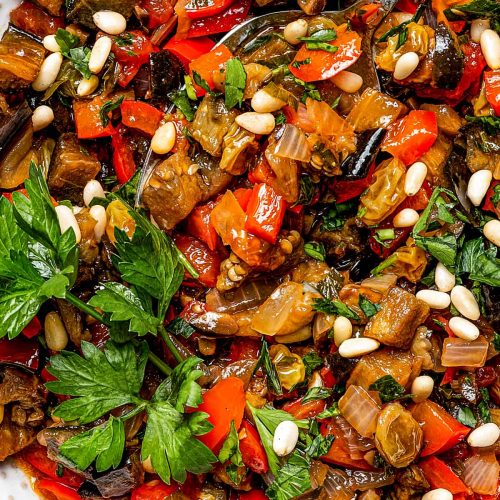
Caponata
Ingredients
Main Ingredients
- 1 pound eggplant cut into 0.5-inch cubes
- 0.5 teaspoon salt
- 1 tablespoon olive oil
- 0.5 cup tomato juice
- 3 tablespoons red wine vinegar or to taste
- 0.25 cup fresh parsley chopped
- 2 tablespoons granulated sugar
- 1 large fresh tomato cored, seeded, and chopped
- 0.25 cup golden raisins
- 3 tablespoons black olives minced
- 2 tablespoons extra virgin olive oil
- 1 small yellow onion finely chopped
- 1 medium red bell pepper seeded and finely chopped
- 0.25 cup pine nuts for serving
- ciabatta bread sliced, for serving
Instructions
Preparation Steps
- Preheat the oven to 400°F.
- Season the eggplant cubes with salt and set aside while the oven preheats.
- Pat the eggplant dry with paper towels, transfer to a sheet pan, drizzle with olive oil, and toss to coat. Roast for 20-25 minutes or until tender and browned.
- In a bowl, whisk together tomato juice, red wine vinegar, chopped parsley, and sugar. Stir in chopped tomato, raisins, and black olives.
- Heat extra virgin olive oil in a skillet over medium-high heat. Add red bell pepper and yellow onion and sauté for about 7 minutes until softened and slightly browned.
- Reduce heat to medium-low, stir in the roasted eggplant and tomato mixture; bring to a simmer and cook for 5 to 8 minutes until sauce thickens.
- Remove from heat and let Caponata sit at room temperature for 1 hour for best flavor. Adjust seasoning with extra salt or vinegar if needed.
- Serve topped with pine nuts alongside sliced ciabatta bread.